
By José Niño
The Israel-first architects of American foreign policy promised another quick victory when the United States and Israel launched a war against the Islamic Republic of Iran. They assured the public that Iran would crumble under the weight of American airpower, that its military infrastructure would disintegrate within weeks, and that regime change was inevitable. Five weeks into Operation Epic Fury, the intelligence community is delivering a brutal reality check.
Click the Link Below to Listen to the Audio of this Article
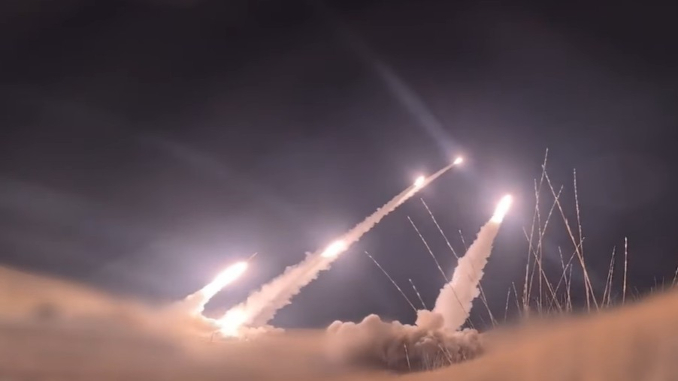
Roughly half of Iran’s missile launchers are still intact and thousands of attack drones remain in Iran’s arsenal despite the daily pounding by the United States and Israel against military targets, according to recent U.S. intelligence assessments obtained by CNN. “They are still very much poised to wreak absolute havoc throughout the entire region,” one source familiar with the intelligence report told CNN.

This is not Afghanistan in 2001. This is not Iraq in 2003. This is not Libya in 2011. Iran has spent decades preparing for precisely this moment, studying American tactics, building redundant systems, and burying its most critical capabilities deep underground where American bombs cannot reach them.
Nowhere is Iran’s preparedness more evident than on Qeshm Island, the geological marvel sitting at the mouth of the Strait of Hormuz through which roughly 20% of the world’s oil passes daily. At approximately 558 square miles, it physically dominates the entrance to the strait from the Persian Gulf.

“Al Jazeera” reporter Mohammad Mansour visited the island in March 2026 and described a landscape transformed from tourist destination to military stronghold:
While tourists once flocked to this “open-air geological museum” to get a glimpse of its surreal rock formations, the world’s gaze is now fixed on what lies beneath the coral: Iran’s “underground missile cities.”
The island serves as what analysts call Iran’s “unsinkable aircraft carrier,” a platform for the asymmetric warfare doctrine that Tehran developed precisely because it understood it could never match American conventional forces head-to-head.
Retired Lebanese Brig. Gen. Hassan Jouni, a military and strategic expert, told “Al Jazeera” that Qeshm houses “striking Iranian capabilities” within what is described as an underground “missile city.”

These vast networks, Jouni explained, are designed for one primary purpose: To effectively control or close the Strait of Hormuz.
And this is precisely what Iran has accomplished. Shipping traffic through the strait was effectively halted when Iran threatened to strike vessels attempting to pass. Only a handful of ships carrying vital oil and gas supplies are being allowed through as countries scramble to negotiate deals with Tehran, even as the Trump administration attempts to assemble a naval convoy to forcibly reopen the waterway.
The architects of this war apparently never considered that their target might actually be capable of fighting back. President Donald Trump told the nation:
Iran’s ability to launch missiles and drones is dramatically curtailed, and their weapons factories and rocket launchers are being blown to pieces, very few of them left.
The intelligence tells a starkly different story. As of mid-March, the United States had struck more than 12,300 targets inside Iran according to U.S. Central Command. Yet the assessments showed roughly 50% of Iran’s missile launching capability remained operational, along with a similar percentage of its drone arsenal and a large portion of its coastal defense cruise missiles.
One source who reviewed the U.S. intelligence assessment dismissed Trump’s suggestion that operations could be completed in two to three weeks:
We can keep f***ing them up, I don’t doubt it, but you’re out of your mind if you think this will be done in two weeks.
The ability to survive this onslaught stems from decades of Iranian preparation that American planners either ignored or underestimated. Iran has long hidden its launchers in extensive networks of tunnels and caves, building redundancy into every system and dispersing its capabilities across terrain that makes targeting extraordinarily difficult.

Two sources told CNN that Iran has had success in shooting and moving its mobile platforms, making tracking nearly impossible, similar to the challenges the United States has faced with the Houthis in Yemen. The arrogance that dismissed these capabilities as primitive or easily destroyed has cost American credibility and potentially American lives.
While Iran’s conventional navy has largely been destroyed, the separate naval forces belonging to the Islamic Revolutionary Guard Corps still retain roughly half of their capabilities according to the intelligence. One source said the IRGC still has “hundreds, if not thousands, of small boats and unmanned surface vessels left.”

The neoconservatives who pushed for this war assumed Iran would be another notch on America’s belt, another regime toppled by shock and awe. Instead, they have delivered a brutal education in modern warfare. The missiles keep launching. The drones keep flying. The Strait of Hormuz remains under Iranian control.
The unipolar moment is over. The sooner Washington accepts this reality, the sooner it can begin extracting itself from a conflict that has already defied every optimistic projection offered by those who started it.
José Niño is a writer based in Charlotte, North Carolina. He is currently the Deputy Editor of Headline USA. You can contact him via Facebook and Twitter. Subscribe to his Substack newsletter by visiting “Jose Nino Unfiltered” on Substack.com.

Leave a Reply